Announcement of the Miguel Artola Prize by the Contemporary History Association 2025
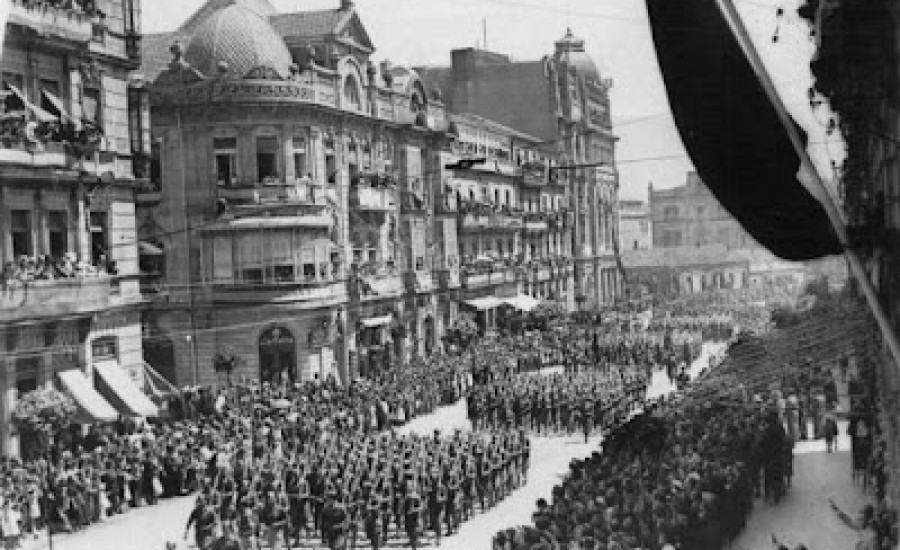
Announcement of the 2025 Miguel Artola Prize from the Contemporary History Association. Isidro Román Lago
In June 2025, the jury for the Miguel Artola Awards for the best doctoral thesis in history, comprising Carme Molinero, Mónica Moreno, María Cruz Romeo, Rafael Quirosa-Cheyrouze and Juan Pan-Montojo, awarded first prize to the thesis by HISTAGRA researcher and collaborator Isidro Román Lago. This research was part of the objectives of the research project ‘Violence, crime and conflict in times of peace and war in the rural world, 1850–1980’ – VIDECON – PID2023-152532NB-I00. KNOWLEDGE GENERATION 2023 – Research projects in the field.
The decision was based on the following considerations: This is a thesis on the processes of transformation driven by the 1936 coup and the subsequent repression in Vigo. It is grounded in a wide range of sources, with pertinent questions and answers woven into a fluid, open narrative that effectively integrates both qualitative and quantitative tools. It constitutes a work of local history whose analysis and interpretative proposals extend beyond the chosen setting, and a study of the rupture brought about by the Civil War, which begins in the months preceding the conflict and extends over a much broader chronological period.
This work has now been published by the Centre for Political and Constitutional Studies, Ministry of the Presidency, as part of the ‘Politics and Society in the History of Spain’ series.
About the publication:
The coup d’état of July 1936 brought the modernising process of the Second Republic to an abrupt halt. What did this mean in terms of certain fundamental social aspects? In this research, particular interest is taken in how society was structured from a somewhat unconventional perspective: leisure time, grassroots culture and sport, and their organisers—three fundamental elements of everyday life in a contemporary society. Furthermore, these activities form part of broader social networks that emerge amidst the city’s most significant labour disputes. Once these aspects have been analysed, we will be able to determine what survives and what disappears with the coup d’état as the new Francoist society takes its first steps. However, we also focus on those who make up the elites that come to hold power, how they govern, and how initiatives for social integration are promoted. This latter aspect, which is central to the research, is carried out through the construction of a database of 32,000 individuals and their public attitudes FE-JONS from 1935 to 1939, focusing in particular on the period from the coup to the Unification Decree. We provide monthly membership figures, details of the social sectors in which growth was concentrated, and the internal repercussions of this growth… We include the conclusions of this section within the historiographical debate on whether or not Franco’s regime was fascist in nature.