Session II Transatlantic Conversations on Memory and History: Dialogues between Spain and Argentina
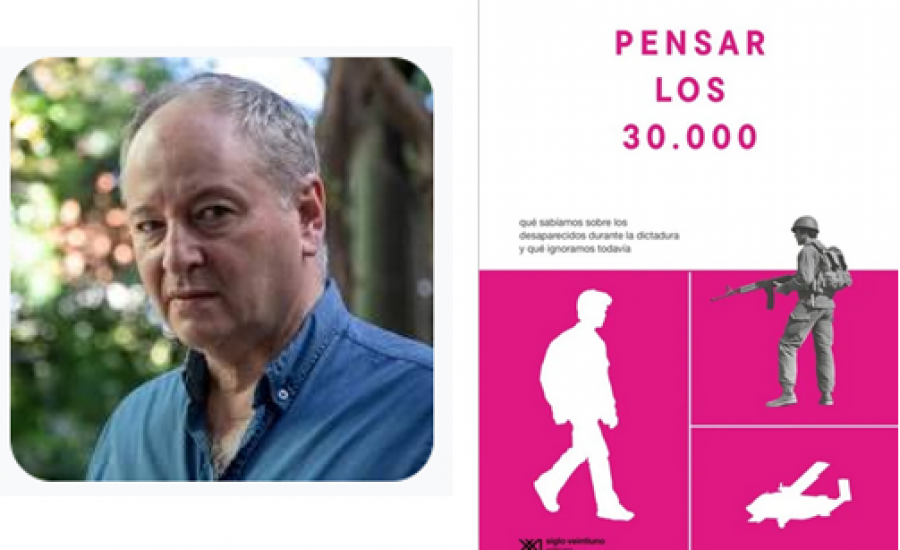
Session II. Transatlantic Conversations on Memory and History: Dialogues between Spain and Argentina, with Emilio Crenzel
On 7 May at 7.00 pm (Spanish time), the second session of the Transatlantic Conversations on Memory and History will take place. Dialogues between Spain and Argentina, organised by the HISTAGRA Group in collaboration with the Group for Studies on Recent History and Social Memory at the Gino Germani Institute (UBA) and the research project Violence, Crime and Conflict in Times of Peace and War in the Rural World (PID2023-152532NB-I00).
On this occasion, Professor Emilio Crenzel will speak about his latest research work Pensar los 30.000. Qué sabíamos sobre los desaparecidos durante la dictadura y qué ignoramos todavía.
About the publication:
The 1970s remain a minefield in Argentina. Nothing illustrates this more clearly than the debate over responsibility for the cycle of political violence and the number of disappeared persons—an issue that resurfaces time and again, dividing, on the one hand, those who hold openly denialist positions and, on the other, those who champion the figure of 30,000. How can we find our way out of this labyrinth, without feeding taboos that often return in the worst possible way, if not through serious, data-driven research?
Guided by a central question—what did society know about clandestine repression in the years following the coup d’état?—and drawing on a review of archives, testimonies and documents, Emilio Crenzel reconstructs how the relatives of the disappeared, human rights organisations, exiles and armed groups gradually built up a body of knowledge about the system of disappearance. He analyses the often conflicting perspectives on those responsible, the whereabouts of the victims, the strategies for accounting for them, and their final fate. In doing so, he shows that even within the circle of whistleblowers there were divergent interpretations, partly because the sheer scale of the horror made it difficult to come to terms with what was happening.
With a rigorous yet deeply sensitive approach, this essential book argues that reflecting on the 30,000 means re-examining the figure in more ways than one: to explain where the number comes from, but above all to address the most uncomfortable questions with sound reasoning. And to acknowledge what we still do not know about the disappeared themselves, the survivors and the perpetrators.
Details:
Date: 7 May 2026
Title: Pensar los 30.000. Qué sabíamos sobre los desaparecidos durante la dictadura y qué ignoramos todavía.
Speaker: Emilio Crenzel
Time: 7.00 pm
Venue: Faculty of Geography and History. Contemporary History Master’s Lecture Theatre